
Komatsu engineer Colten Leviere spoke to NAM’s Jonathan Rowland and Donna Schmidt about the transition of ‘intelligent’ longwall mining as automation makes its way into the technology.

While the number of longwall panels in operation in North America sits at its lowest level in some time, those that remain are producing at the highest average output levels ever recorded. Longwall systems represent a significant capital investment in equipment, and they demand some of the most technically proficient operators in the industry to maintain high uptime and rigorous safety standards. Within this context, the question of full automation has become a recurring theme in longwall mining circles. Will we ever see a fully automated longwall system? What are its implications for underground communications, and what does the broader automation trend mean for the future of longwall mining? NAM explored these themes with longwall automation expert, Komatsu’s Colten Leviere.
NAM: Could you provide a brief overview of longwall automation development?
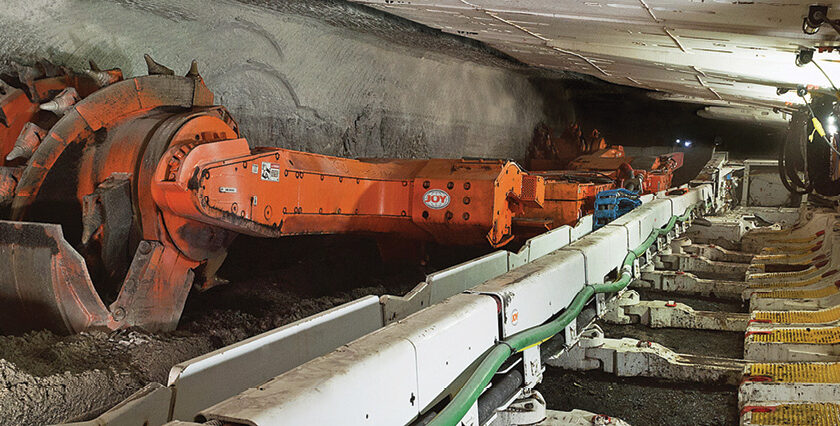
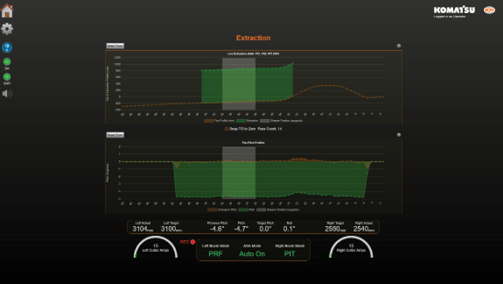
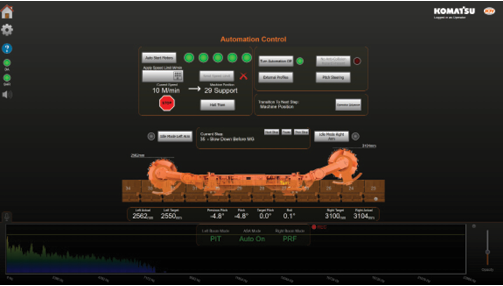
Leviere: Longwall automation has progressed from basic remote operation to advanced systems that enable true remote management of the entire face. Komatsu’s Longwall Command and Control (LCC) integrates data visualization, automation, and remote operation, allowing operators to oversee shearer performance and manage production from safer locations, including surface control rooms. These advancements represent an important step toward fully autonomous longwall mining.
What are the key components of a fully automated longwall system, and how do they integrate?
A fully automated longwall system combines shearer automation, powered roof support control, face alignment technology, and advanced communications. These components are tied together through platforms like LCC, which serve as the central hub for real-time data, visualization and automated decision-making. The result is a coordinated, integrated system that drives consistency, safety and productivity.
How has automation impacted longwall productivity and worker safety?
Automation improves productivity by reducing variability between shifts, enabling steadier cutting, and minimizing downtime from manual errors. From a safety perspective, automation allows operators to move farther away from the face, work in cleaner air, and reduce exposure to dust, noise and hazards. Mines using LCC and remote management centers have seen measurable gains in both worker safety and operational consistency.
How is communications and sensor technology evolving to support advances in longwall automation, such as real-time monitoring and decision-making in longwall operations?
High-speed communications, robust networking underground, and improved sensors are making it possible to monitor machine conditions, face alignment, and even sound patterns in real-time. With LCC, onboard microphones, cameras, and advanced data feeds provide operators with clear insights into shearer performance and cutting conditions, enabling faster, more informed decision-making while working remotely.
What role does AI or machine learning play in longwall automation?
AI and machine learning are increasingly being used to process large volumes of sensor and operational data, identify patterns, and recommend adjustments in real-time. For example, audio and vibration analysis can detect early signs of issues before they escalate, while predictive algorithms support maintenance planning. Over time, these tools will further reduce reliance on manual inputs and accelerate the path toward fully autonomous longwalls.
What are the current limitations or challenges in achieving full automation in longwall mining?
Challenges include the complexity of variable geological conditions, the need for robust underground communications infrastructure, and the integration of multiple systems into a seamless workflow. While automation has advanced significantly, certain conditions – like unexpected seam changes – still require human oversight and input. Development efforts are focused on reducing these scenarios through smarter sensing and decision-support tools.
What are the most significant barriers to adoption for mines considering longwall automation?
The biggest challenge is not the technology itself, but overcoming natural hesitation to adopt new ways of working. The tools are proven and ready for deployment, and many customers are already running their longwalls in automation more than 85% of the time. To help others reach that level, Komatsu provides both classroom and practical on-site training, along with direct support from our highly skilled technicians.
How do you approach training and upskilling the workforce to operate and maintain automated systems?
Training focuses on shifting operators from machine-by-machine control to system-level management. Komatsu provides operator-friendly interfaces, optional trainer seats, and simulation tools to build confidence quickly. Hands-on commissioning, structured training programs, and ongoing service partnerships help teams upskill efficiently while ensuring safer and effective use of automation technologies.
What innovations or developments do you foresee in longwall automation over the next 5–10 years?
Future innovations will likely include expanded AI-driven sensing, more advanced seam detection, and enhanced integration with mine-wide data systems. Audio and visual analysis tools will continue to evolve, providing clearer real-time insights. Over the next decade, longwalls will steadily move closer to full autonomy, with operators increasingly focused on oversight, optimization and strategic decision-making rather than manual control.